When to dive in Dahab ?
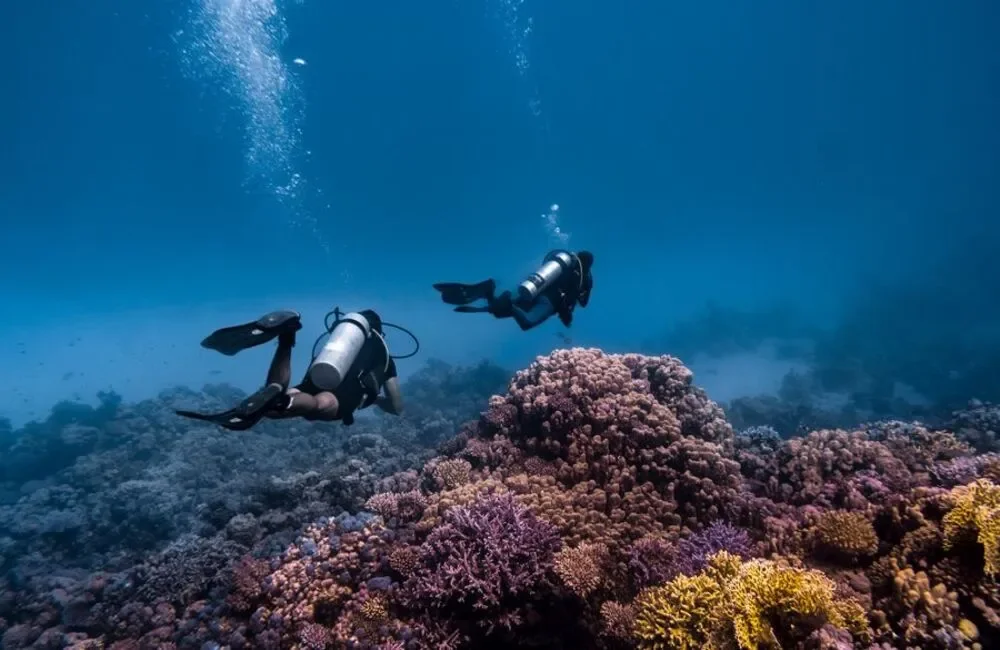
In Dahab, diving is mainly done from the shore, between coral gardens, canyons, and drop-offs plunging into the blue of the Gulf of Aqaba. From the Blue Hole to the Canyon, the destination offers very varied profiles, from formations to deep and technical dives. It is also one of the high places of freediving in the Red Sea.
When to Dive
Monthly overview of conditions in this destination.
| Jan | Feb | Mar | Apr | May | Jun | Jul | Aug | Sep | Oct | Nov | Dec | |
|---|---|---|---|---|---|---|---|---|---|---|---|---|
| Climate | ☀️ | ☀️ | ☀️ | ☀️ | ☀️ | ☀️ | ☀️ | ☀️ | ☀️ | ☀️ | ☀️ | ☀️ |
| Temperature in degrees Celsius | 20-24 | 21-25 | 24-28 | 28-33 | 31-36 | 34-39 | 35-40 | 35-40 | 32-37 | 28-33 | 24-29 | 21-25 |
| Water temperature in degrees Celsius | 22-24 | 21-22 | 21-23 | 22-24 | 23-26 | 25-28 | 27-30 | 28-30 | 27-30 | 26-29 | 24-28 | 22-26 |
| Peak of Attendance | ● | ● | ● | ● |
| Jan | Feb | Mar | Apr | May | Jun | Jul | Aug | Sep | Oct | Nov | Dec | |
|---|---|---|---|---|---|---|---|---|---|---|---|---|
| Climate | ☀️ | ☀️ | ☀️ | ☀️ | ☀️ | ☀️ | ☀️ | ☀️ | ☀️ | ☀️ | ☀️ | ☀️ |
| Temperature in degrees Celsius | 20-24 | 21-25 | 24-28 | 28-33 | 31-36 | 34-39 | 35-40 | 35-40 | 32-37 | 28-33 | 24-29 | 21-25 |
| Water temperature in degrees Celsius | 22-24 | 21-22 | 21-23 | 22-24 | 23-26 | 25-28 | 27-30 | 28-30 | 27-30 | 26-29 | 24-28 | 22-26 |
| Peak of Attendance | ● | ● | ● | ● |
Located on the eastern coast of the Sinai Peninsula, facing the Gulf of Aqaba, Dahab has a distinct identity different from the major Egyptian diving stations.
Here, a large part of the sites is accessible directly from the shore. Blue Hole, Canyon, Lighthouse, Eel Garden, or the Islands are among the most known dives, while more isolated sectors like Gabr el Bint can be reached by boat, 4x4, or, to add a bit of folklore to the trip, on camel back.
This ease of access allows for a variety of diving profiles: shallow areas for training, coral gardens, drops, drift dives, or deeper explorations.
Dahab has also established itself as an important destination for technical diving and freediving with its flagship site: The Blue Hole
Climate and Seasons
Dahab benefits from a desert climate, hot and very dry, with a generally clear sky throughout the year.
Winter offers relatively mild days, even if nights can become noticeably cooler. In contrast, July and August can be particularly hot, with land temperatures approaching 40 to 45 °C during the hottest periods.
Underwater, variations are more moderate. The temperature drops to around 20 to 22 °C during the coolest months and can reach approximately 28 to 30 °C in summer. February is generally one of the coolest months, while August and September correspond to the warmest waters.
Therefore, diving is possible throughout the year. Spring and autumn generally offer a good balance between water temperature and land comfort, while summer allows for particularly warm water.
Diving Conditions
Visibility is one of Dahab's major assets. It is regularly 20 meters and can be significantly higher when conditions are favorable.
Many dives start directly from the shore, and several sites benefit from relatively protected conditions. Lighthouse, for example, has a sheltered area used for training and first dives.
This does not mean that all Dahab dives are easy.
Exposed drops and certain profiles around the Blue Hole and Bells require more experience, particularly due to depth and blue exposure.
The Canyon also presents a particular topography with an underwater fissure and several passages that require good profile management. The choice of site should always remain adapted to the level, experience, and certification of each individual, so ask your center!
Marine Life and Fauna
Dahab's reefs welcome marine life characteristic of the northern Red Sea throughout the year.
Butterflyfish, angelfish, clownfish, anthias, parrotfish, moray eels, scorpionfish, octopuses, blue-spotted rays, and turtles can be observed according to the sites, amidst hard and soft corals.
Some dives have a particularly unique identity linked to their environment. Eel Garden owes its name to the numerous garden eels installed on the sandy bottoms. Barracudas are also regularly observed there.
Further south, Gabr el Bint combines reefs, gorgonians, and fish banks in a much less frequented sector.
Sharks and Large Pelagics
Dahab is not a destination chosen in priority to search for large sharks, unlike some offshore reefs in southern Egypt.
However, the drops give directly onto the deep waters of the Gulf of Aqaba and can reserve occasional encounters with large animals.
These observations remain difficult to predict, and there is no sufficiently regular season to build a trip to Dahab around a specific pelagic species.
The richness of the destination therefore relies mainly on its reefs, underwater reliefs, the ease of access to sites, and the diversity of diving profiles.
Where to Dive in Dahab?
Among the many sites in Dahab, we can mention:
Lighthouse
Located directly at the level of the city, Lighthouse is one of the most accessible sites in Dahab.
Its sheltered and shallow area is widely used for training and beginner divers. The outer reef then offers more relief and allows for a gradual progression to deeper profiles.
Its central location in Dahab also makes it a particularly practical site for refresher dives, technical exercises, and certain night dives.
Eel Garden
Just a few minutes from the center, Eel Garden owes its name to the numerous garden eels occupying the sandy bottoms.
The dive alternates sandy slope and reef, with varied marine life and generally accessible profiles. As you approach, the eels disappear gradually into the sand before resurfacing a few moments later.
Islands
The Islands offers a different landscape from the large drops associated with Dahab.
The site is characterized by coral gardens and reef formations creating passages and small tunnels. It is accessible from the shore and allows for evolution in the midst of a significant concentration of corals and reef fish.
Canyon
Located north of Dahab, The Canyon is one of the region's iconic sites.
After entering from the shore, the dive joins a large underwater fissure that gives the site a very particular topography. Some passages require more attention to depth and profile management.
This is one of the dives that best represents the mineral and spectacular aspect of Dahab's seafloor.
Blue Hole and Bells
It's impossible to talk about Dahab without mentioning the Blue Hole.
One of the most known profiles starts at Bells, a narrow chimney that opens onto the outer drop. The dive then continues along the wall before joining the Blue Hole through a shallow reef area.
The site attracts leisure divers, freedivers, and technical divers, but the possible profiles are very different.
It's essential to distinguish The Arch, a deep passage located far beyond the limits of recreational diving and reserved for technical diving with adapted training and equipment.
Gabr el Bint
Further south, Gabr el Bint offers a much more isolated atmosphere.
The site can be reached by boat, 4x4, or, depending on the chosen organization, on camel back. This more limited access explains the lower frequency of this site compared to the major sites near Dahab.
Reefs, drops, gorgonians, fish banks, rays, and turtles make up the main part of the dive.
FAQ
What is the best time to dive in Dahab?
Dahab can be dived throughout the year.
Spring and autumn generally offer the best balance between water temperature and land comfort. In summer, the water is particularly warm, but land temperatures can become intense. Winter remains perfectly diveable, with cooler water and sometimes cooler evenings.
There is no really bad time. You just need to decide whether you prefer to dive in very warm water or avoid the heat on land.
Is Dahab suitable for beginner divers?
Yes.
Lighthouse and several other sheltered areas allow for training and first dives in good conditions. However, Dahab also has more challenging sites.
The fact that a site is accessible from the shore does not necessarily mean it is easy. The precise choice of dive remains more important than the destination itself.
Can you dive in Dahab without taking a boat?
Yes, and that's one of the destination's main features.
Lighthouse, Eel Garden, Islands, Canyon, or Blue Hole are accessible from the shore. It is therefore possible to complete a significant part of a diving stay without embarking on a boat every day.
Certain more distant areas, such as Gabr el Bint, require a different organization.
Do you need to be a technical diver to enjoy the Blue Hole?
No.
The Blue Hole offers perfectly achievable profiles in leisure diving when the diver's level and conditions allow it. The classic profile from Bells, for example, is practiced by Advanced divers.
However, The Arch belongs to a completely different universe: significant depth, specific environment, and technical diving. It should not be confused with "diving at the Blue Hole" and "traversing The Arch".
Blue Hole, Canyon, or Lighthouse: which one to choose?
Take all three, captain! If you're going to Dahab, you might as well enjoy what each one has to offer.
Lighthouse is particularly practical for beginners, refresher dives, or working on technique. Canyon stands out for its topography. Blue Hole and Bells offer the drops and that sense of deep blue that have largely contributed to Dahab's reputation.
Partner dive centers in this destination
+ List my centerBook directly with our verified dive centers.