When to dive at Hamata, Fury Shoals and in the Deep South?
As you head south of Marsa Alam, hotels become scarcer and reefs take up more and more space. Hamata opens the door to Fury Shoals, to Sataya and, even further, to the reefs of St John’s, Zabargad and Rocky Island. Another facet of the Egyptian Red Sea, where one comes as much for the coral labyrinths and dolphins as for the big drops from the open sea.
When to Dive
Monthly overview of conditions in this destination.
| Jan | Feb | Mar | Apr | May | Jun | Jul | Aug | Sep | Oct | Nov | Dec | |
|---|---|---|---|---|---|---|---|---|---|---|---|---|
| Climate | ☀️ | ☀️ | ☀️ | ☀️ | ☀️ | ☀️ | ☀️ | ☀️ | ☀️ | ☀️ | ☀️ | ☀️ |
| Temperature in °C | 22-26 | 23-27 | 25-30 | 29-34 | 32-37 | 34-39 | 35-40 | 35-40 | 33-38 | 30-35 | 26-31 | 23-27 |
| Water temperature in °C | 23-25 | 22-24 | 23-25 | 24-26 | 25-27 | 27-29 | 28-30 | 29-30 | 28-30 | 27-29 | 26-28 | 24-26 |
| Peak of Attendance | ● | ● | ● | ● | ● | ● | ||||||
| Dolphins | ⭐⭐⭐ | ⭐⭐⭐ | ⭐⭐ | ⭐⭐ | ⭐⭐ | ⭐⭐ | ⭐⭐ | ⭐⭐ | ⭐⭐⭐ | ⭐⭐⭐ | ⭐⭐⭐ | |
| Hammerhead Sharks | ⭐ | ⭐ | ⭐ | ⭐⭐ | ⭐⭐⭐ | ⭐⭐⭐ | ⭐⭐⭐ | ⭐⭐⭐ | ⭐⭐ | ⭐⭐ | ⭐ | ⭐ |
| Longimanus Sharks | ⭐⭐ | ⭐⭐ | ⭐⭐ | ⭐⭐ | ⭐ | ⭐ | ⭐ | ⭐ | ⭐⭐ | ⭐⭐⭐ | ⭐⭐⭐ | ⭐⭐⭐ |
| Jan | Feb | Mar | Apr | May | Jun | Jul | Aug | Sep | Oct | Nov | Dec | |
|---|---|---|---|---|---|---|---|---|---|---|---|---|
| Climate | ☀️ | ☀️ | ☀️ | ☀️ | ☀️ | ☀️ | ☀️ | ☀️ | ☀️ | ☀️ | ☀️ | ☀️ |
| Temperature in °C | 22-26 | 23-27 | 25-30 | 29-34 | 32-37 | 34-39 | 35-40 | 35-40 | 33-38 | 30-35 | 26-31 | 23-27 |
| Water temperature in °C | 23-25 | 22-24 | 23-25 | 24-26 | 25-27 | 27-29 | 28-30 | 29-30 | 28-30 | 27-29 | 26-28 | 24-26 |
| Peak of Attendance | ● | ● | ● | ● | ● | ● | ||||||
| Dolphins | ⭐⭐⭐ | ⭐⭐⭐ | ⭐⭐ | ⭐⭐ | ⭐⭐ | ⭐⭐ | ⭐⭐ | ⭐⭐ | ⭐⭐⭐ | ⭐⭐⭐ | ⭐⭐⭐ | |
| Hammerhead Sharks | ⭐ | ⭐ | ⭐ | ⭐⭐ | ⭐⭐⭐ | ⭐⭐⭐ | ⭐⭐⭐ | ⭐⭐⭐ | ⭐⭐ | ⭐⭐ | ⭐ | ⭐ |
| Longimanus Sharks | ⭐⭐ | ⭐⭐ | ⭐⭐ | ⭐⭐ | ⭐ | ⭐ | ⭐ | ⭐ | ⭐⭐ | ⭐⭐⭐ | ⭐⭐⭐ | ⭐⭐⭐ |
Hamata constitutes one of the last major diving bases on the Egyptian coast before entering the much less developed regions of the south. From this part of the littoral, divers can join the reefs of the Fury Shoals, a vast ensemble of reefs, lagoons, pinnacles, and coral formations.
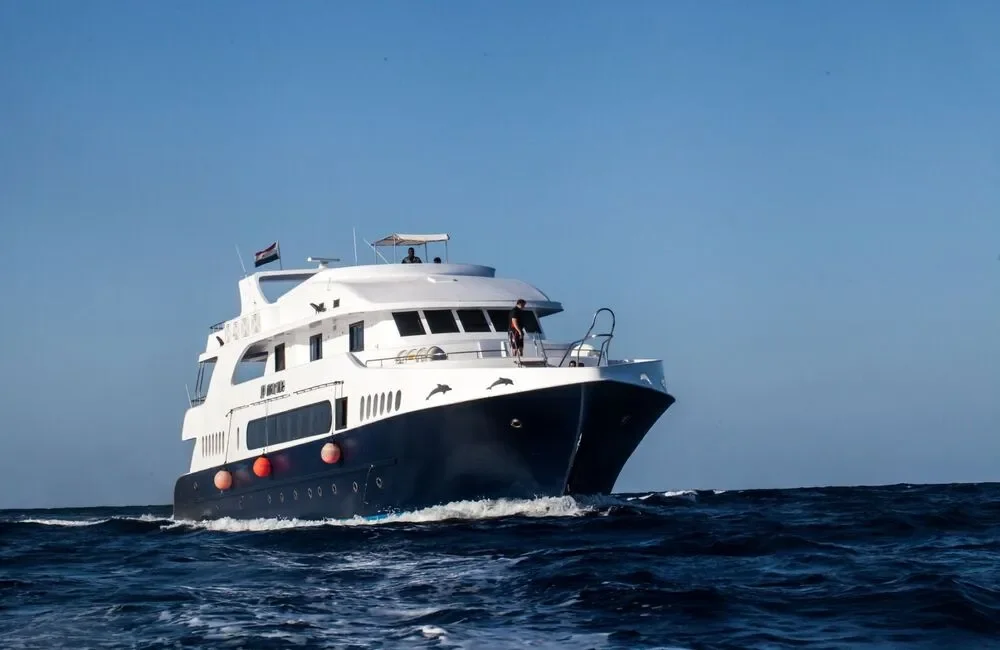
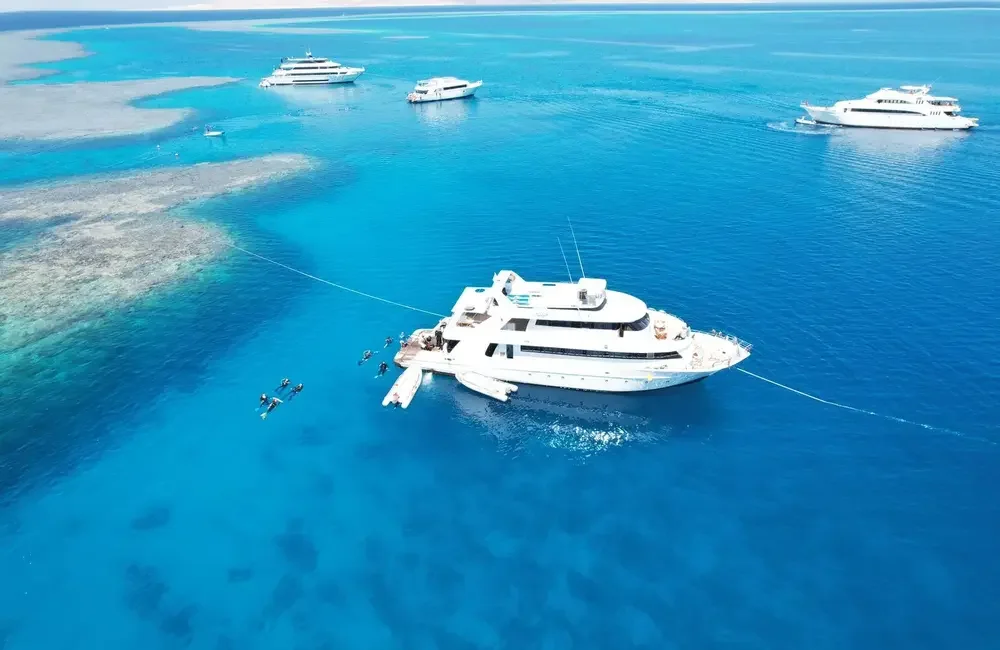
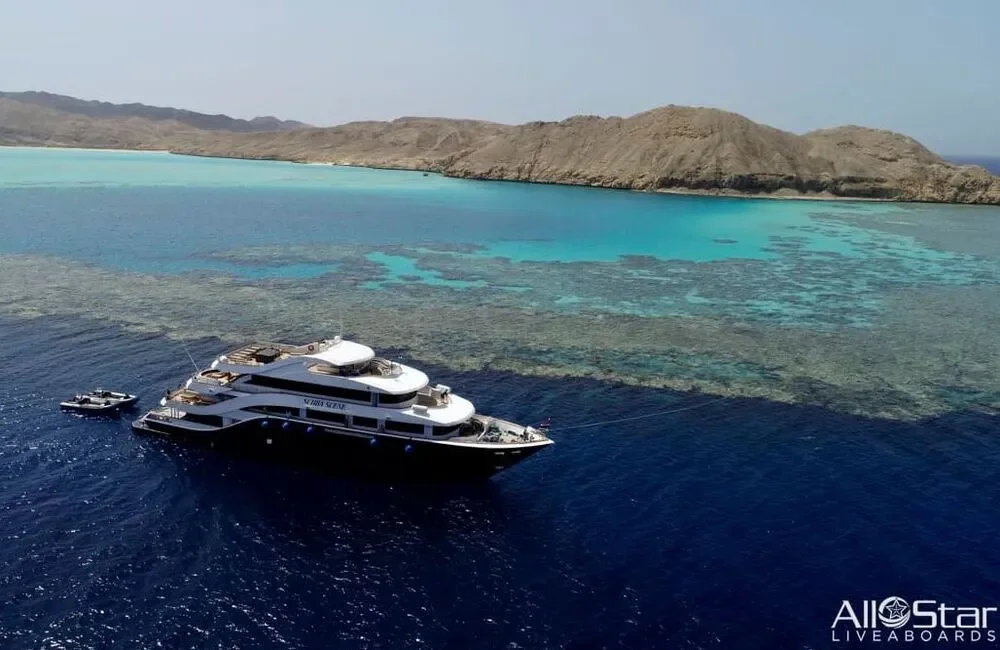
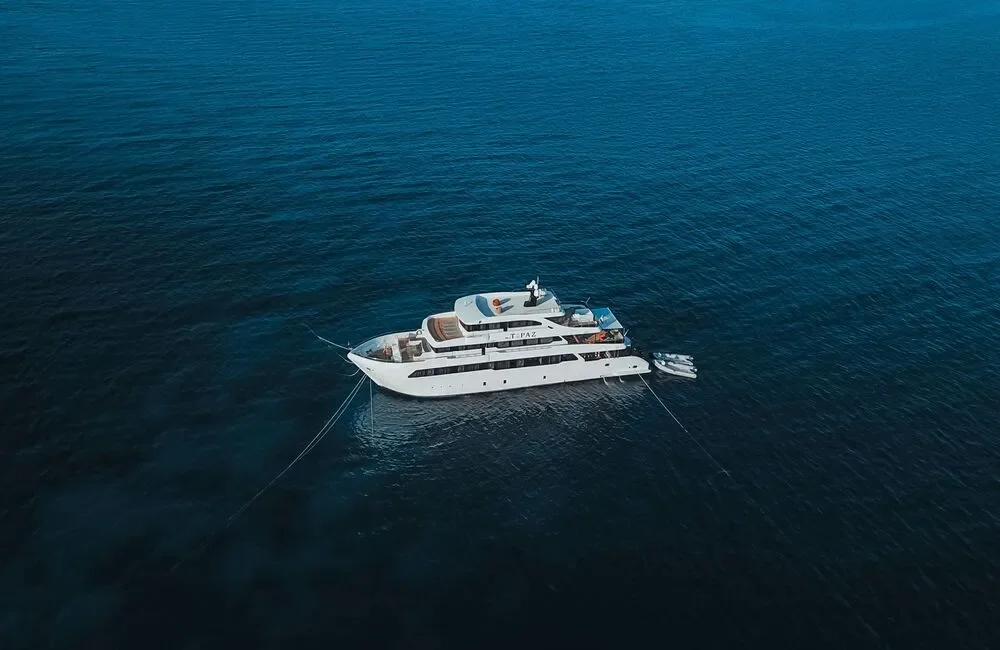
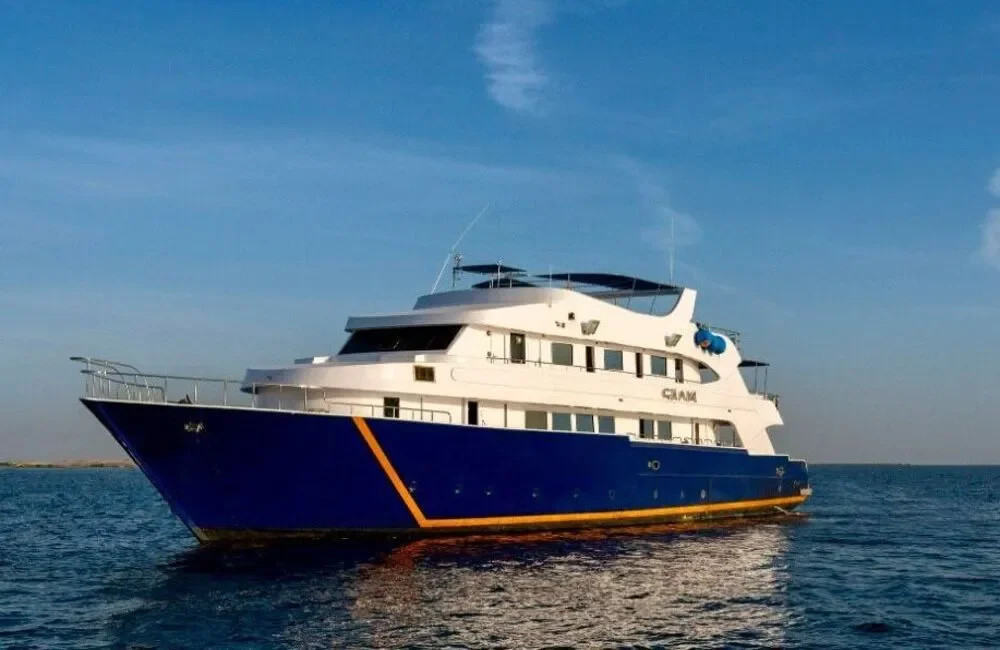
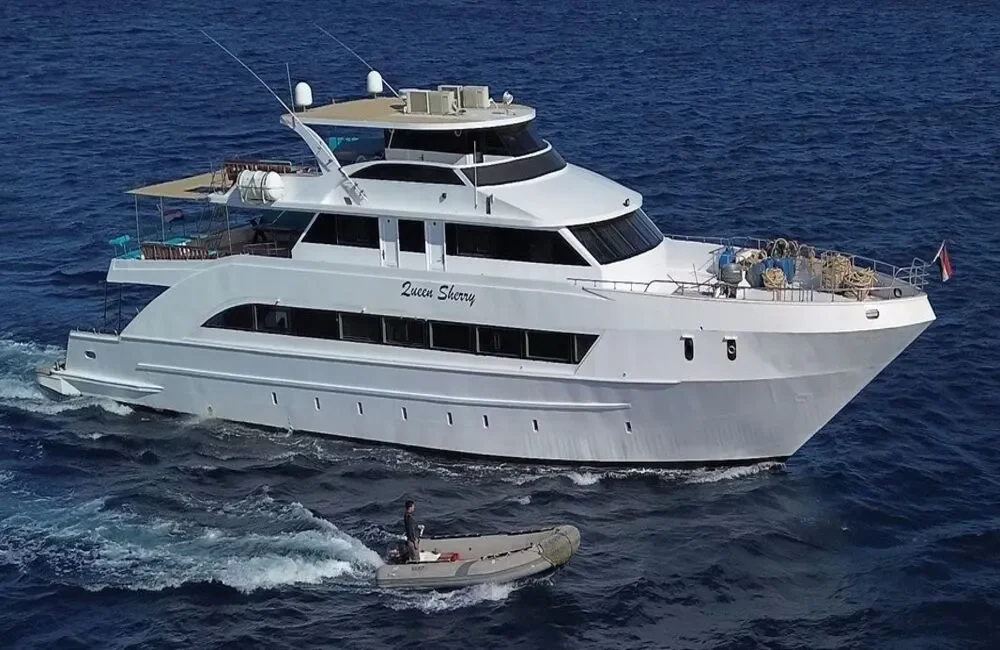
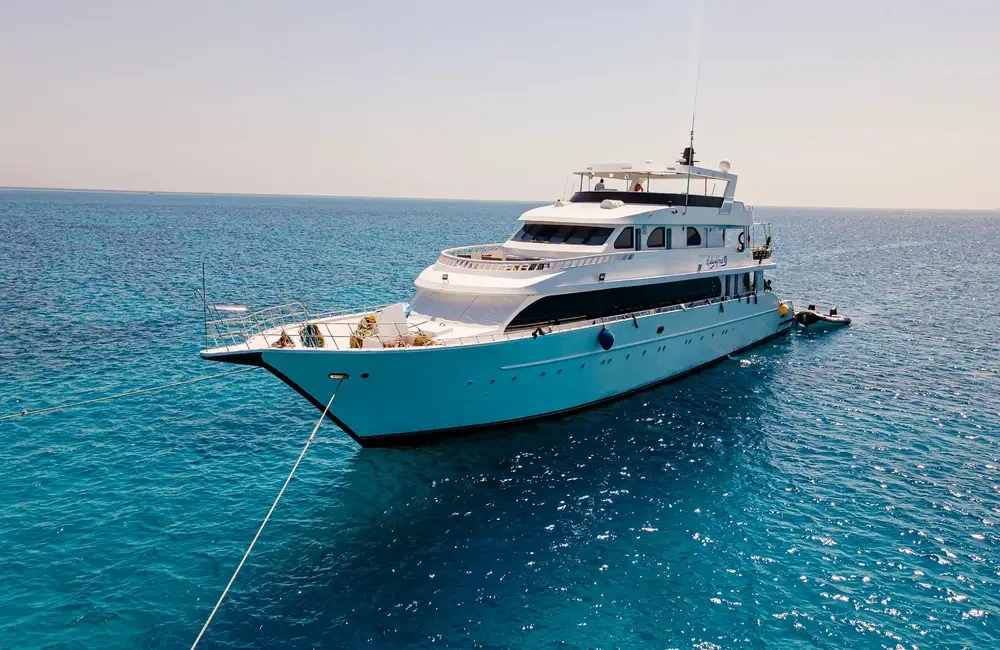
The region can be explored from the coast, with day trips from Hamata and Wadi Lahami, but it also constitutes a great classic of the liveaboard itineraries.
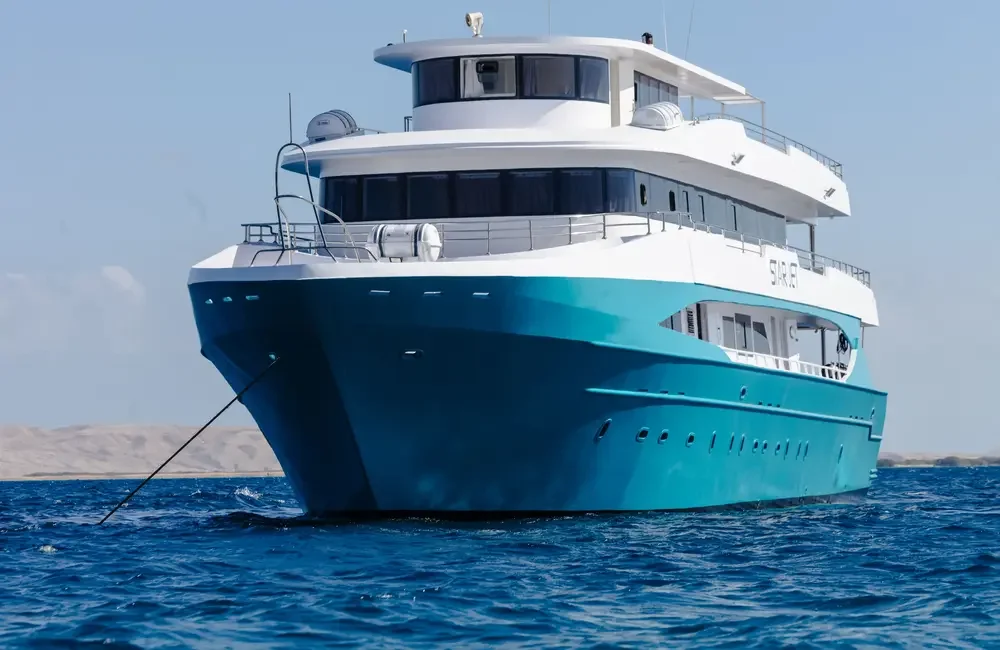
Further south, the logic changes again. St John’s, Zabargad, and Rocky Island belong to what operators generally group together under the term of Deep South. The distance becomes greater and the liveaboard takes on its full meaning to access these sectors. Rocky and Zabargad are among the most remote diving areas accessible in Egypt.
This progression of the littoral towards the open sea and then towards the extreme south gives the region a unique diversity: coral gardens, shallow passages and caves, frequented lagoons by dolphins, but also exposed drop-offs and encounters with large pelagic species.
Climate and seasons
The climate of southern Egyptian Red Sea remains desert-like, hot, and extremely dry.
Winter offers the mildest temperatures on land, while the heat becomes very important in summer. Underwater, the variations are less brutal: the temperature generally drops to around 23 to 25 °C during the coolest months and can reach approximately 29 to 30 °C during the warmest months.
Diving is possible all year round, but the distance to some sites makes the sea conditions particularly important here.
Spring and autumn generally offer a good compromise between water temperature, external heat, and navigation conditions. For the most remote sectors of the Deep South, the actually proposed itineraries can also vary according to the seasons and sea conditions.
Diving conditions
It is impossible to give a unique level of difficulty to Fury Shoals and the Deep South, as the dives are so different.
Some reefs allow you to stay relatively shallow, in the middle of pinnacles and coral gardens. Shaab Claudio, for example, is particularly known for its passages and its network of coral formations that you explore at low depth.
At the other end of the spectrum, sites like Habili Ali, Habili Gafar, or Rocky Island are much more open to the open sea. The drop-offs plunge into great depths, and the currents can become powerful. Rocky Island, in particular, is surrounded by steep walls directly exposed to the currents.
The level required depends a lot on the chosen itinerary. A liveaboard centered on Fury Shoals does not necessarily present the same requirements as a program descending to Rocky and Zabargad.
Marine life and fauna
The reefs of the south are particularly renowned for their coral formations and their reef richness.
Tortoises, moray eels, napoleons, carangues, barracudas, tunas, and various species of rays accompany a great diversity of reef fish. Fury Shoals is particularly characterized by its hard and soft corals and its numerous reef ensembles.
But two animal universes stand out particularly: the dolphins of Sataya and the large pelagic species of the most southerly reefs.
The dolphins of Sataya
Shaab Sataya, often called Dolphin Reef, forms a vast horseshoe-shaped reef whose lagoon is frequented by long-beaked dolphins.
This is one of the most famous places in southern Egypt for their observation. Encounters are mainly made in snorkeling in the lagoon rather than during a classic scuba dive.
Their presence remains that of wild animals. Sataya is their environment, not a pool with a dolphin show at 10:30 am.
Sharks and large pelagic species
As you head towards the exposed reefs of the Deep South, the possibility of encountering pelagic species becomes more important.
St John’s can offer encounters with grey sharks, coral sharks, and, more occasionally, hammerheads or other large pelagic species.
Rocky Island has a different identity. Its isolation, its drop-offs, and the currents that sweep the reef make it a particularly interesting sector for sharks and large pelagic fish. Grey sharks, hammerheads, and, much more occasionally, tiger sharks are observed there.
It is essential to keep in mind that these observations are not guaranteed. The Deep South is interesting precisely because you dive in an open environment where the encounter remains a meeting.
Where to dive at Hamata and in the Deep South ?
Fury Shoals
Fury Shoals designates a vast ensemble of reefs rather than a specific site.
Its great particularity is the diversity of its coral formations. Some sectors form gardens and pinnacles, while others are traversed by passages, small cavities, and channels.
It is this underwater architecture that gives Fury Shoals a very different personality from the large vertical drop-offs of BDE.
Shaab Claudio
Shaab Claudio is one of the iconic sites of the Fury Shoals.
Its interest lies mainly in its architecture: shallow passages, openings in the reef, and games of light allow you to circulate in the middle of the coral formations.
So, you come here to look for something completely different from a blue dive in search of sharks: the reef itself becomes the terrain of exploration.
Sataya
Further south, Sataya stands out for its vast internal lagoon and the regular presence of long-beaked dolphins.
The reef also has its own diving sites, but its international reputation rests mainly on the encounters with dolphins.
St John’s
Even further south, St John’s does not correspond to a single reef but to a group of nearby reefs near the Sudanese border.
The area combines very different dives, from the famous shallow passages of St John’s Caves to the drop-offs and more exposed reefs of Habili Ali and Habili Gafar.
This is probably one of the sectors that best illustrates the diversity of the Deep South: a dive can consist of circulating between shallow coral formations, the next one descending along an open drop-off or exploring a more exposed reef.
Zabargad
Zabargad is a large island located in the extreme south of Egypt.
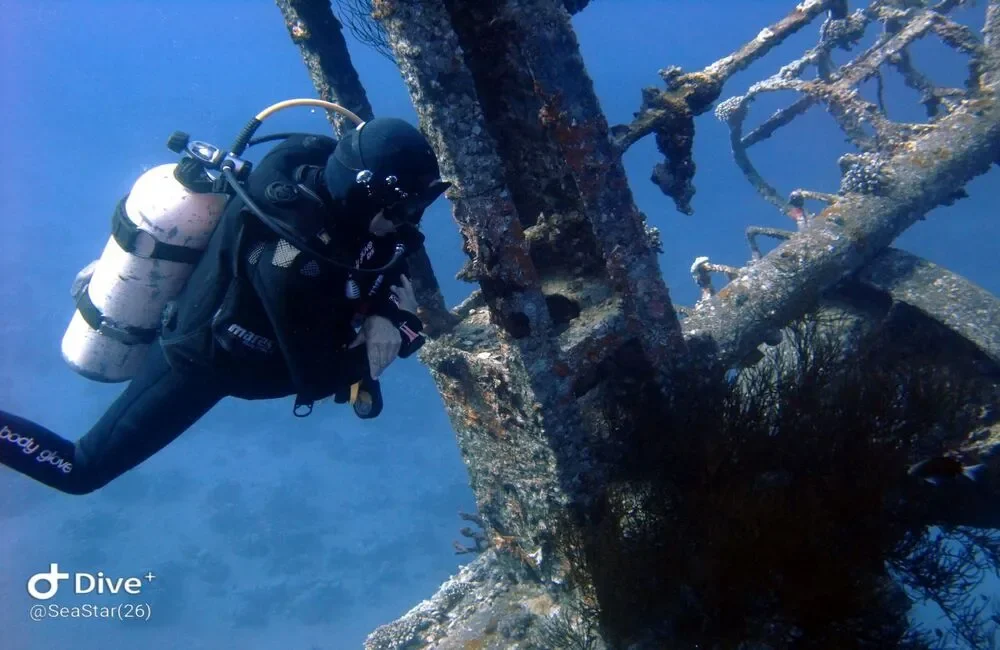
It offers different landscapes from the more vertical reefs of the open sea, with coral gardens, reef slopes, plateaus, and a wreck on its northern part. Tortoises, barracudas, carangues, and reef sharks are among the possible encounters.
Its interest comes as much from the variety of its dives as from its remoteness.
Rocky Island
A few kilometers from Zabargad, Rocky Island changes completely.
Small isolated island surrounded by deep waters, it is bordered by walls covered with soft corals, gorgonians, and sponges. The currents can be strong there and favor the presence of pelagic fish and sharks.
While Zabargad offers more topographic variety, Rocky represents more the offshore dive in the raw: a small piece of reef, a lot of blue around, and no idea of what can come out of it.
FAQ
Fury Shoals and Deep South, is it the same thing ?
Not exactly.
Fury Shoals designates a specific ensemble of reefs accessible from the Hamata region. Deep South is a broader term used for liveaboards descending to the southern sectors of Egypt, including St John’s, Zabargad, and Rocky Island.
The names can be used differently according to the operators. The most important thing before booking a liveaboard is to look at the sites actually included in the itinerary, rather than its commercial name.
What is the difference between BDE and the Deep South ?
The two allow you to discover offshore reefs, but their personality is quite different.
BDE is strongly oriented towards large drop-offs, currents, and shark encounters around three very exposed reefs.
The Deep South offers a wider palette: coral gardens, shallow passages, dolphins at Sataya, reefs of St John’s, and then more oceanic dives around Rocky and Zabargad.
Choosing between the two comes down less to finding "the best" than to deciding what type of week underwater you want to have.
Can we dive at Fury Shoals without doing a liveaboard ?
Yes.
Several sectors of the Fury Shoals are accessible during organized day trips from Hamata and Wadi Lahami. The liveaboard, however, allows you to greatly expand your range of action and chain together more distant reefs.
On the other hand, to descend to the most remote sectors of the Deep South like Rocky Island and Zabargad, the liveaboard becomes the logical solution.
Can we see the dolphins of Sataya all year round ?
The long-beaked dolphins regularly frequent the lagoon of Sataya, but no encounter with a wild animal can be guaranteed.
It is essential to keep in mind that Sataya is a resting area for dolphins. The quality of the experience depends as much on the behavior of the visitors and the guidance as on the presence of the animals.
Is the Deep South reserved for experienced divers ?
Not in its entirety.
It is precisely one of the main differences with BDE. Some sites in Fury Shoals or St John’s offer relatively shallow dives around coral formations, while Rocky Island or some exposed habili can present greater depth, currents, and full sea conditions that are much more demanding.
It is essential to look at the precise itinerary and the sites planned, then check the operator's requirements.
Partner dive centers in this destination
+ List my centerBook directly with our verified dive centers.