When to dive in Hurghada ?
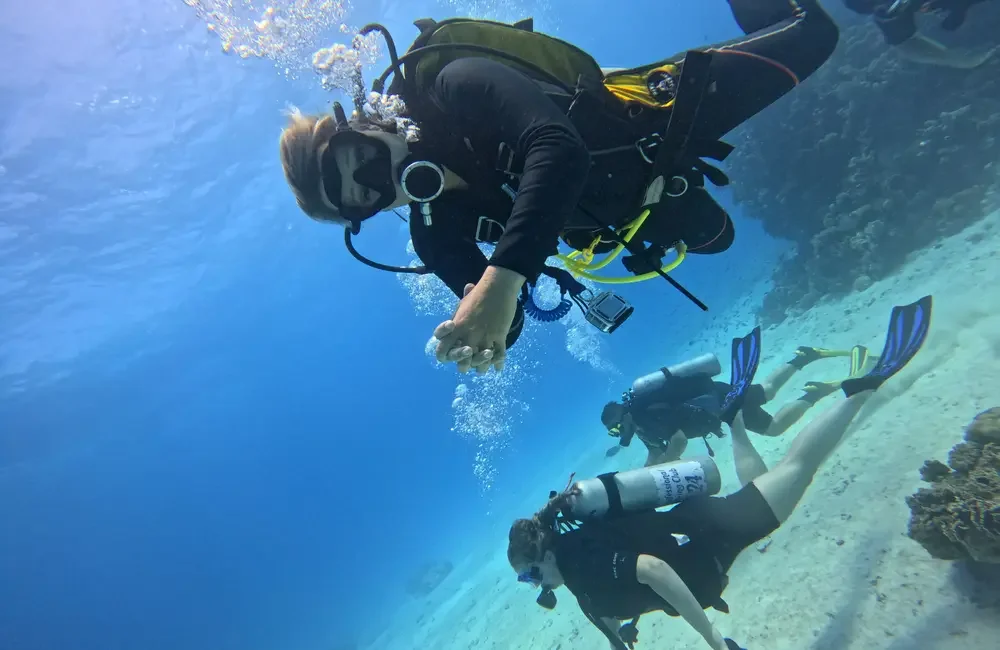
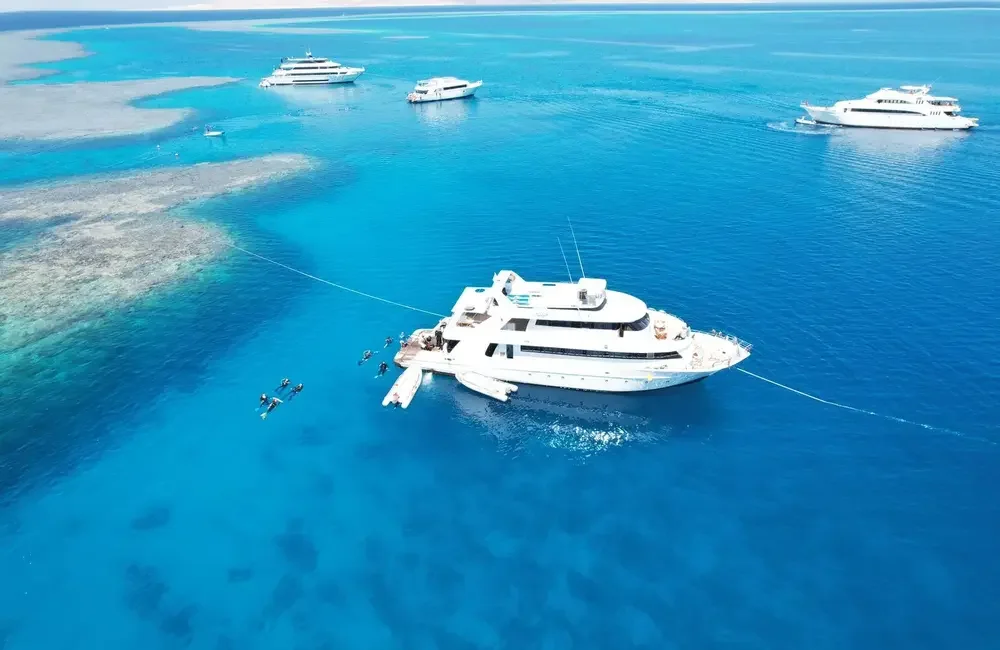
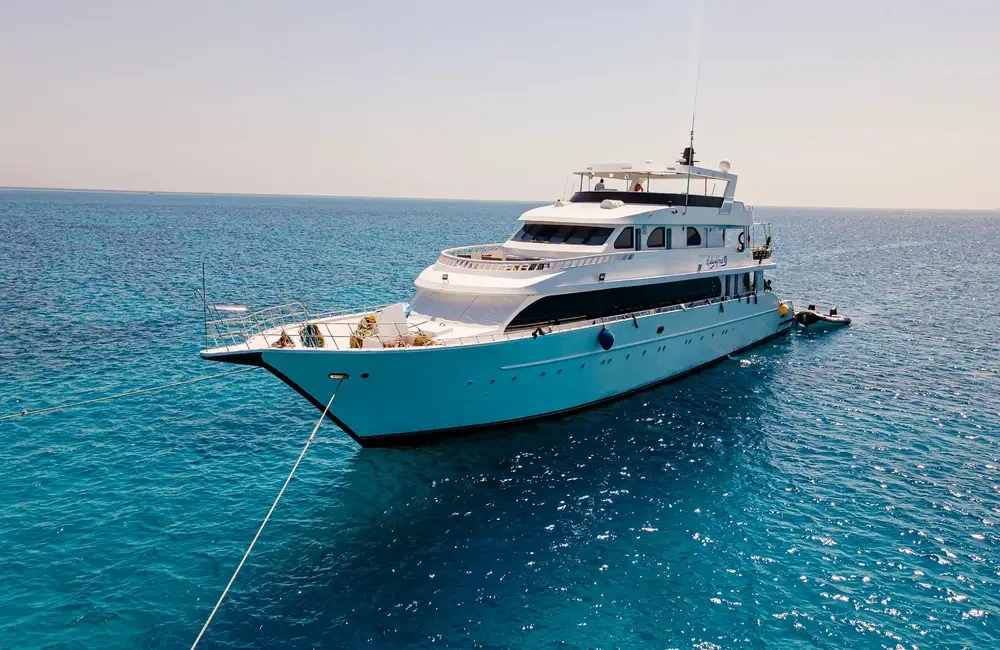
In Hurghada, diving is mainly done from a boat, between coral gardens, islands, and scattered reefs off the coast. The destination offers a wide range of day trips, accessible dives for drifters as well as more exposed ones, while also opening the door to the famous wrecks of the north of the Red Sea.
When to Dive
Monthly overview of conditions in this destination.
| Jan | Feb | Mar | Apr | May | Jun | Jul | Aug | Sep | Oct | Nov | Dec | |
|---|---|---|---|---|---|---|---|---|---|---|---|---|
| Weather | ☀️ | ☀️ | ☀️ | ☀️ | ☀️ | ☀️ | ☀️ | ☀️ | ☀️ | ☀️ | ☀️ | ☀️ |
| T°C | 20 - 24 | 21-25 | 23-28 | 27-32 | 30-35 | 33-38 | 35-40 | 35-40 | 32-37 | 29-34 | 25-29 | 21-25 |
| Water temperature in °C | 22-24 | 21-23 | 22-23 | 23-24 | 24-26 | 26-28 | 27-29 | 28-29 | 28-29 | 27-28 | 25-27 | 23-25 |
| Peak of attendance | ● | ● | ● | |||||||||
| Dolphins | ⭐⭐ | ⭐⭐ | ⭐⭐ | ⭐⭐ | ⭐⭐ | ⭐⭐⭐ | ⭐⭐⭐ | ⭐⭐⭐ | ⭐⭐ | ⭐⭐ | ⭐⭐ | ⭐⭐ |
| Jan | Feb | Mar | Apr | May | Jun | Jul | Aug | Sep | Oct | Nov | Dec | |
|---|---|---|---|---|---|---|---|---|---|---|---|---|
| Weather | ☀️ | ☀️ | ☀️ | ☀️ | ☀️ | ☀️ | ☀️ | ☀️ | ☀️ | ☀️ | ☀️ | ☀️ |
| T°C | 20 - 24 | 21-25 | 23-28 | 27-32 | 30-35 | 33-38 | 35-40 | 35-40 | 32-37 | 29-34 | 25-29 | 21-25 |
| Water temperature in °C | 22-24 | 21-23 | 22-23 | 23-24 | 24-26 | 26-28 | 27-29 | 28-29 | 28-29 | 27-28 | 25-27 | 23-25 |
| Peak of attendance | ● | ● | ● | |||||||||
| Dolphins | ⭐⭐ | ⭐⭐ | ⭐⭐ | ⭐⭐ | ⭐⭐ | ⭐⭐⭐ | ⭐⭐⭐ | ⭐⭐⭐ | ⭐⭐ | ⭐⭐ | ⭐⭐ | ⭐⭐ |
Located on the Egyptian Red Sea coast, Hurghada is one of the country's main diving bases.
Unlike Dahab, where diving is practiced extensively from the shore, the organization in Hurghada is mainly based on day boat dives. The reefs surrounding the Giftun Islands, Abu Ramada, Umm Gamar, or Careless Reef offer a great diversity of profiles at a relatively reasonable distance from the coast.
This concentration of sites allows for easy adaptation of dives to the level of participants. Shallow coral gardens, sandy plateaus, drop-offs, and drift dives can thus succeed each other during the same stay.
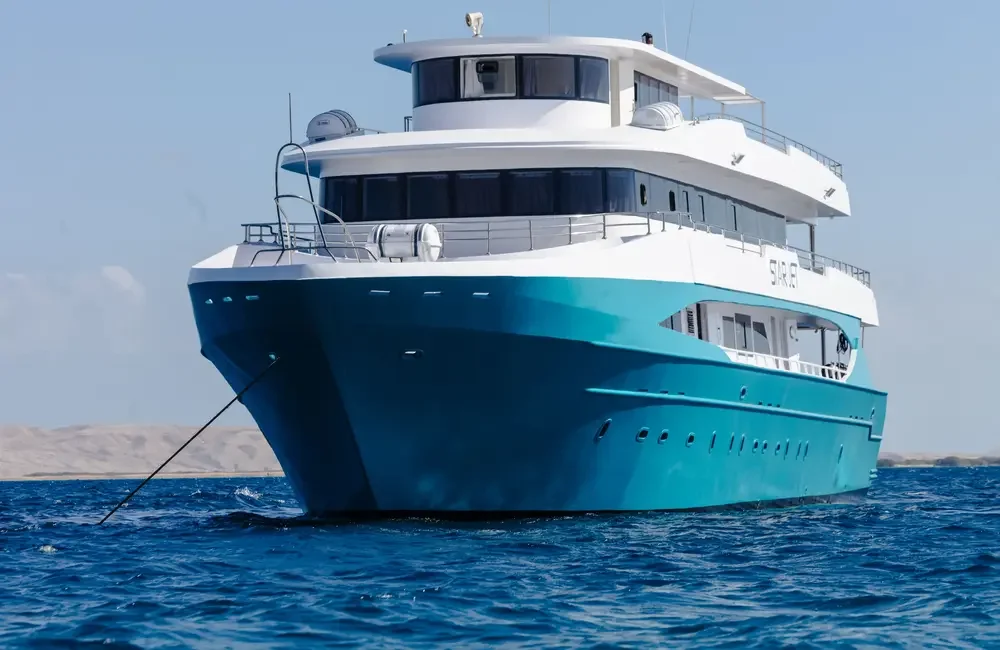
Hurghada also constitutes a departure point for exploring the northern Red Sea. The wrecks of Abu Nuhas, the Gubal Strait, or the SS Thistlegorm are notably integrated into different cruise itineraries departing from the region.
Climate and Seasons
Hurghada benefits from a particularly dry desert climate, with significant sunshine throughout the year and very low precipitation.
Winter remains mild during the day, with average highs around 21 to 23 °C in January and February. Conversely, June to September are much hotter, with average highs regularly exceeding 34 °C and reaching approximately 36 °C in July and August.
Underwater, variations are more moderate. The temperature is around 22 °C in February, generally the coolest month, then increases progressively to reach approximately 28 to 29 °C in July and August. It remains close to 27 °C in October before decreasing progressively at the end of the year.
Therefore, diving is possible throughout the year. Spring and autumn often offer a good compromise between water temperature and external comfort.
Diving Conditions
Hurghada offers very different conditions depending on the reefs.
Many sites are relatively sheltered, with shallow plateaus and coral gardens adapted to beginner divers or training. Conversely, some outer reefs and drop-offs are more exposed to currents and allow for more dynamic drift dives.
Visibility is generally good to very good and regularly exceeds 20 meters. On some outer reefs, it can exceed 30 meters when conditions are favorable.
Surface conditions can also vary depending on the wind. The choice of sites is therefore often adapted daily by the centers in accordance with the weather and the level of divers.
This variety is part of the main interests of Hurghada: it is possible to start on a shallow and sheltered reef, then discover progressively deeper dives, drifts, or wrecks without changing destination.
Marine Life and Fauna
The reefs around Hurghada welcome a great diversity of fish typical of the Red Sea throughout the year.
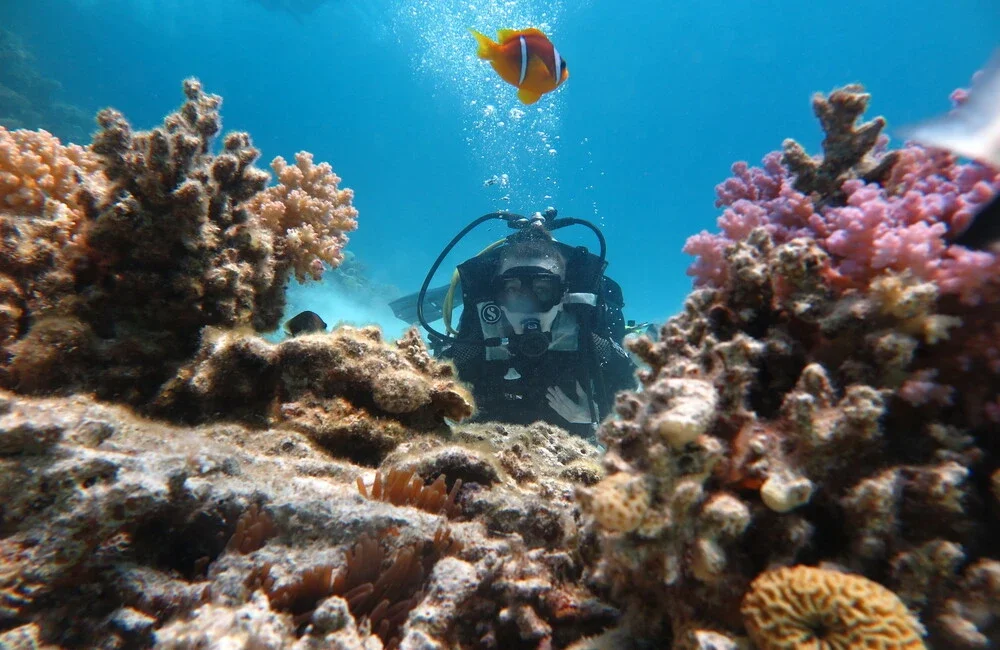
Butterflyfish, angelfish, clownfish, moray eels, parrotfish, triggerfish, groupers, blue-spotted rays, and turtles are part of the common encounters depending on the sites.
On more exposed reefs like Small Giftun, it is also possible to cross carangues, thuns, and other fish evolving in the blue, while the plateaus and coral gardens shelter more reef fauna.
Whales and Large Pelagics
Dolphins can be encountered in different sectors around Hurghada.
Further north, Shaab El Erg, also known for its "Dolphin House", has a large lagoon frequented by large dolphins. Encounters remain obviously random and can never be guaranteed.
Hurghada is not, however, a destination that would be chosen in priority to search for large sharks. Sharks, eagle rays, or other large pelagics may occasionally appear on outer reefs, but their presence is much less regular than on offshore sites like Brothers, Daedalus, or Elphinstone.
Occasional observations of mantas are possible in the Egyptian Red Sea during spring and early summer, but they remain too unpredictable around Hurghada to build a trip around these encounters.
Where to Dive in Hurghada?
The reefs around Hurghada are spread across several islands, shoals, and reef zones accessible mainly by boat. Some are close to the coast, while others are more exposed to the open sea, and the major wrecks are located further north.
The Giftun Islands
The Giftun Islands are one of the main references for diving around Hurghada.
The sector is particularly interesting for the variety of its underwater landscapes, with very colorful reef zones, drop-offs, and several sites allowing you to enjoy the currents to perform drift dives. Small Giftun is particularly well-known among the most popular sectors.
Abu Ramada
Abu Ramada brings together several sites around a single island and stands out for the diversity of its reliefs.
It features coral gardens, sandy zones, and a northern part where the reef plunges much more steeply into the depths. This configuration allows you to discover several atmospheres around a single reef ensemble.
Careless Reef
Careless Reef is a solitary reef located further out to sea.
Its exposure and the possible currents give it a different atmosphere from the more sheltered areas near the islands. It is particularly interesting for enjoying the blue, the more open reliefs, and the possibility of encountering pelagic fish around the reef.
Fanadir and Umm Gamar
Located north of Hurghada, Fanadir and Umm Gamar allow you to expand the possibilities of diving towards less directly associated sectors with the Giftun Islands.
Fanadir is particularly known for its long reef stretching parallel to the coast, while Umm Gamar is an isolated island surrounded by several diving sites. Their position to the north also makes them a natural transition towards the wreck zones of the Gubal Strait.
Wrecks around Hurghada
Hurghada also allows you to integrate wreck dives into your stay.
El Mina, located near the port, is directly accessible from the region. For the most famous wrecks in the northern Red Sea, you need to look further north towards Abu Nuhas, the Gubal Strait, or the SS Thistlegorm.
Abu Nuhas is particularly notable for the concentration of several wrecks around a single reef, while the Thistlegorm is a destination in its own right due to its size, cargo, and distance.
FAQ
What is the best time to dive in Hurghada?
All seasons are good for diving in Hurghada.
Spring and autumn generally offer a very good balance between warm water and pleasant temperatures on land. Summer allows you to enjoy water temperatures around 28 to 29 °C, but you need to like the heat on the surface. Winter is much milder on land, with water temperatures around 22 °C during the coolest months.
The best time therefore depends mainly on your tolerance to heat and cold.
Is Hurghada suitable for beginner divers?
Yes, and it's even one of its main advantages.
Many reefs have shallow areas, sandy plateaus, and relatively sheltered conditions. It is therefore easy to adapt dives to a beginner while offering, on other sites, deeper dives or more exposed dives for experienced divers.
As always, it's not the entire destination that is "easy" or "difficult", it's the chosen site and the conditions of the day.
Can you see dolphins while diving in Hurghada?
Yes, but they remain wild animals and the encounter is never guaranteed.
Shaab El Erg, located north of the region, is particularly known for the large dolphins that frequent its lagoon and channels. Dolphins can also be encountered elsewhere around Hurghada during navigation or dives.
And if they pass by, enjoy it: with dolphins, it's always them who decide on the meeting.
Can you dive on wrecks from Hurghada?
Yes, but not all are located just in front of the city.
El Mina is located directly in the Hurghada sector. The major wrecks of Abu Nuhas, the Gubal Strait, or the SS Thistlegorm are much further north and are more associated with special outings or cruises in the northern Red Sea.
It is therefore necessary to check the program proposed by the center rather than assuming that all wrecks are accessible during a standard day trip.
Partner dive centers in this destination
+ List my centerBook directly with our verified dive centers.