When to dive in Marsa Alam and Port Ghalib?
Marsa Alam is one of the regions where the Red Sea changes its face. Along a still largely desert coastline, sheltered bays, frequented by turtles and dugongs, coral reefs and open drop-offs meet the open sea. Far out, Elphinstone adds to this diversity the possibility of encountering some of the iconic large sharks of the Red Sea.
When to Dive
Monthly overview of conditions in this destination.
| Jan | Feb | Mar | Apr | May | Jun | Jul | Aug | Sep | Oct | Nov | Dec | |
|---|---|---|---|---|---|---|---|---|---|---|---|---|
| Climate | ☀️ | ☀️ | ☀️ | ☀️ | ☀️ | ☀️ | ☀️ | ☀️ | ☀️ | ☀️ | ☀️ | ☀️ |
| T°C | 21-25 | 22-26 | 25-29 | 28-33 | 31-36 | 34-38 | 35-40 | 35-40 | 33-38 | 30-35 | 26-31 | 22-27 |
| Water temperature | 23-25 | 22-24 | 23-25 | 24-26 | 25-27 | 27-29 | 28-30 | 29-30 | 28-30 | 27-29 | 26-28 | 24-26 |
| Peak of attendance | ● | ● | ● | ● | ||||||||
| Dolphins | ⭐⭐ | ⭐⭐ | ⭐⭐ | ⭐⭐ | ⭐⭐ | ⭐⭐ | ⭐⭐ | ⭐⭐ | ⭐⭐ | ⭐⭐ | ⭐⭐ | ⭐⭐ |
| Dugongs | ⭐⭐ | ⭐⭐ | ⭐⭐ | ⭐⭐ | ⭐⭐ | ⭐⭐ | ⭐⭐ | ⭐⭐ | ⭐⭐ | ⭐⭐ | ⭐⭐ | ⭐⭐ |
| Longimanus sharks | ⭐ | ⭐ | ⭐ | ⭐ | ⭐ | ⭐ | ⭐ | ⭐⭐ | ⭐⭐⭐ | ⭐⭐⭐ | ⭐⭐⭐ | ⭐⭐ |
| Jan | Feb | Mar | Apr | May | Jun | Jul | Aug | Sep | Oct | Nov | Dec | |
|---|---|---|---|---|---|---|---|---|---|---|---|---|
| Climate | ☀️ | ☀️ | ☀️ | ☀️ | ☀️ | ☀️ | ☀️ | ☀️ | ☀️ | ☀️ | ☀️ | ☀️ |
| T°C | 21-25 | 22-26 | 25-29 | 28-33 | 31-36 | 34-38 | 35-40 | 35-40 | 33-38 | 30-35 | 26-31 | 22-27 |
| Water temperature | 23-25 | 22-24 | 23-25 | 24-26 | 25-27 | 27-29 | 28-30 | 29-30 | 28-30 | 27-29 | 26-28 | 24-26 |
| Peak of attendance | ● | ● | ● | ● | ||||||||
| Dolphins | ⭐⭐ | ⭐⭐ | ⭐⭐ | ⭐⭐ | ⭐⭐ | ⭐⭐ | ⭐⭐ | ⭐⭐ | ⭐⭐ | ⭐⭐ | ⭐⭐ | ⭐⭐ |
| Dugongs | ⭐⭐ | ⭐⭐ | ⭐⭐ | ⭐⭐ | ⭐⭐ | ⭐⭐ | ⭐⭐ | ⭐⭐ | ⭐⭐ | ⭐⭐ | ⭐⭐ | ⭐⭐ |
| Longimanus sharks | ⭐ | ⭐ | ⭐ | ⭐ | ⭐ | ⭐ | ⭐ | ⭐⭐ | ⭐⭐⭐ | ⭐⭐⭐ | ⭐⭐⭐ | ⭐⭐ |
The region of Marsa Alam stretches along a long portion of the southern coast of Egypt. Diving does not organize around a single city, but rather between many hotels, eco-lodges, bays, and centers spread along the coast.
Port Ghalib, located further north and near the international airport of Marsa Alam, plays a special role. Its marina serves as a base for local outings as well as a departure point for many cruises to offshore reefs and the southern Red Sea.
This geography allows for the combination of several types of diving. Bays and coastal reefs allow for easy exploration of the seabed from the coast or during short outings, while boats and speedboats provide access to more distant sites such as Elphinstone.
The region is distinguished by this relatively rare association in Egypt between reef diving, large animals, and access to Red Sea southern itineraries.
Climate and seasons
Marsa Alam benefits from a desert climate, hot and extremely dry, with significant sunshine throughout the year.
Winter offers much milder temperatures on land, while the heat becomes intense in summer. July and August are the hottest months, while December to February offer the most temperate conditions on the surface.
The water temperature evolves more gradually. It generally drops to around 22 to 24 °C during the coolest months, then warms up in the spring to around 28 to 30 °C between late summer and early autumn.
Diving is therefore possible throughout the year. Spring and autumn generally offer an excellent compromise between external heat and water temperature, but here the choice of period may also depend on the animals you want to search for.
Diving conditions
The length of Marsa Alam's coastline leads to very different conditions from one site to another.
The many marsa, these characteristic natural bays of the coastline that also give their name to the region, often offer protected access and allow for direct diving from the shore. Some harbor fringing reefs, others vast sandy areas and seagrass beds.
As soon as you leave these bays to join the outer reefs, the conditions change significantly.
Elphinstone is the most obvious example. This isolated reef is surrounded by deep waters and can be subject to significant currents. Dives take place around its drop-offs and north and south plateaus, in a much more exposed environment.
Visibility is generally very good throughout the region, but like elsewhere in the Red Sea, it varies according to wind, currents, and local conditions.
Marine life and fauna
Marine life is one of the main arguments for Marsa Alam.
The reefs welcome all year round butterflyfish, angelfish, clownfish, moray eels, napoleons, rays, and a significant diversity of reef fish.
But it is especially the seagrass beds that give some bays their particular identity.
Turtles and dugongs
Abu Dabbab and Marsa Mubarak, near Port Ghalib, possess vast seagrass beds where green turtles come to feed. Dugongs also frequent these habitats and constitute one of the most sought-after encounters in the region.
The dugong is never guaranteed. It is a wild animal that moves between different feeding areas.
Turtles are much more regularly encountered in these bays.
Whales
South of Marsa Alam, Sha’ab Samadai, nicknamed Dolphin House, is known for the long-beaked dolphins that use its lagoon as a resting area during the day. Access to the sector is regulated to limit disturbances.
Sharks
For sharks, the name that immediately comes to mind is Elphinstone Reef.
Its position offshore and its drop-offs open onto deep waters allow you to meet different sharks and large pelagics, including hammerheads and especially the famous longimanus or oceanic whitetip.
Seasonality should, however, be presented with caution. Observations vary from year to year and conditions, and no period guarantees a meeting, we remain with wild animals!
Elphinstone remains one of the main accessible sites from the Egyptian coast to search for large sharks without necessarily spending several days on a cruise.
Where to dive in Marsa Alam and Port Ghalib?
Abu Dabbab
Abu Dabbab is above all characterized by its large bay and seagrass beds.
Green turtles constitute the most regular encounter, while the dugong makes the site's reputation without being present permanently. The reefs located on either side of the bay complete the dive and allow you to pass from seagrass beds to coral formations during a single immersion.
Marsa Mubarak
Located closer to Port Ghalib, Marsa Mubarak is based on a similar logic, with many green turtles frequenting its vast seagrass beds, also visited by dugongs
The bay is wide, relatively protected, and shallow in its inner part. It thus constitutes one of the main sectors of the region for searching for this fauna associated with seagrass beds.
Elphinstone Reef
Located a few kilometers offshore, Elphinstone offers a radically different dive.
This long and narrow reef is bordered by drop-offs plunging into great depths. Its plateaus, its exposure to currents, and its position in the blue make it especially one of the major sites in Egypt for large pelagics and sharks.
Sha’ab Samadai, Dolphin House
Located offshore from Marsa Alam, Sha’ab Samadai has a horseshoe shape that creates a large internal lagoon.
The site is especially known as a resting area for long-beaked dolphins. Its interest does not therefore rely solely on a classic reef dive, but on a particular environment whose human frequency is now subject to specific regulation.
The reefs and bays of the coast
Reducing Marsa Alam to Abu Dabbab and Elphinstone would be to overlook one of the main particularities of the destination.
The coast is punctuated by many marsa, fringing reefs, and house reefs accessible from hotels and diving camps. This organization allows you to build a stay around local dives without necessarily multiplying long boat trips.
The exact site depends greatly on where you stay, more than in Hurghada where a large part of the centers join the same reefs by boat.
Port Ghalib and liveaboard departures
Port Ghalib has a different function from the other sectors of this article.
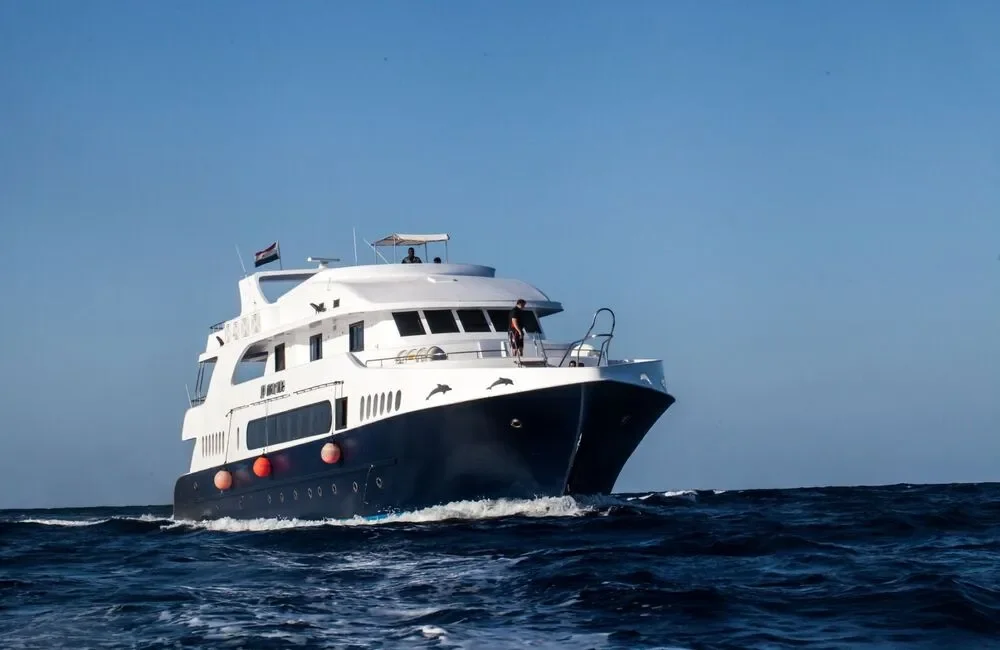
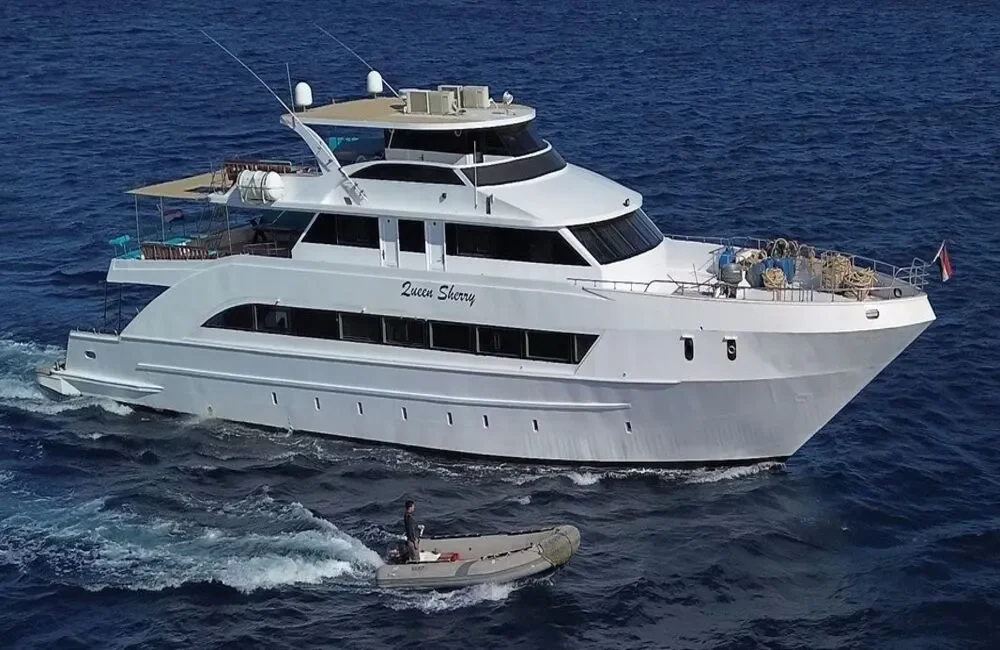
Its marina is one of the main departure points for cruises to Brothers, Daedalus, Elphinstone, Fury Shoals, St John’s, Rocky Island, and Zabargad. Some of these sites are several hours of navigation further south and should not therefore be considered as diving sites from Port Ghalib in the strict sense.
Port Ghalib is above all the logistical entrance to these itineraries, which explains its importance in the world of Egyptian diving.
FAQ
What is the best time to dive in Marsa Alam?
Diving is possible throughout the year.
Spring and autumn generally offer the most comfortable compromise between water temperature and external heat. Summer allows you to enjoy the warmest waters, while winter offers much milder temperatures on land but cooler water.
At Marsa Alam, the answer also depends on what you want to see. If your priority is a specific animal, such as certain sharks, the period may become more important than a few degrees of difference in the water.
Do we really have a chance to see a dugong in Marsa Alam?
Yes, but it's better to go with the right philosophy.
Abu Dabbab and Marsa Mubarak possess the seagrass beds that dugongs feed on and are regularly sought after in these sectors.
This does not, however, transform the dugong into a programmed attraction. You can quickly come across it, search for it for several days, or never see it.
Arm yourself with patience, diver in search of a dugong ;)
What is the difference between Marsa Alam and Port Ghalib for diving?
Marsa Alam generally refers to a vast diving region that stretches along the coast, while Port Ghalib is a marina and a tourist hub located further north.
The choice of accommodation therefore greatly influences the organization of dives. Port Ghalib facilitates boat and liveaboard departures, while many establishments located along the coast have their own house reef or direct access to a bay, with an organization that can allow for several dives during the day.
Can we see sharks without going on a liveaboard?
Yes.
Elphinstone Reef is accessible during day trips from several sectors of the region and constitutes one of the main Egyptian sites for searching for large sharks.
This does not mean you will see them. But unlike Brothers or Daedalus, several days of liveaboard are not necessary to access the site.
Abu Dabbab or Marsa Mubarak to see a dugong?
Both bays possess seagrass beds frequented by dugongs and turtles.
Neither guarantees the encounter. The presence of the dugong varies, and the interest of the two sites does not, of course, rely solely on this animal.
The best choice depends mainly on your place of stay, the organization of outings, and recent observations.
Partner dive centers in this destination
+ List my centerBook directly with our verified dive centers.